Thursday, 14 May 2015

Nano memory cell can mimic the brain’s long-term memory


RMIT University researchers have mimicked the way the human brain processes information with the development of an electronic long-term memory cell.
Researchers at the MicroNano Research Facility (MNRF) have built the one of the world's first electronic multi-state memory cell which mirrors the brain's ability to simultaneously process and store multiple strands of information.
The development brings them closer to imitating key electronic aspects of the human brain -- a vital step towards creating a bionic brain -- which could help unlock successful treatments for common neurological conditions such as Alzheimer's and Parkinson's diseases.
The discovery was recently published in the materials science journal Advanced Functional Materials.
Project leader Dr Sharath Sriram, co-leader of the RMIT Functional Materials and Microsystems Research Group, said the ground-breaking development imitates the way the brain uses long-term memory.
"This is the closest we have come to creating a brain-like system with memory that learns and stores analog information and is quick at retrieving this stored information," Dr Sharath said.
"The human brain is an extremely complex analog computer… its evolution is based on its previous experiences, and up until now this functionality has not been able to be adequately reproduced with digital technology."
The ability to create highly dense and ultra-fast analog memory cells paves the way for imitating highly sophisticated biological neural networks, he said.
The research builds on RMIT's previous discovery where ultra-fast nano-scale memories were developed using a functional oxide material in the form of an ultra-thin film -- 10,000 times thinner than a human hair.
Dr Hussein Nili, lead author of the study, said: "This new discovery is significant as it allows the multi-state cell to store and process information in the very same way that the brain does.
"Think of an old camera which could only take pictures in black and white. The same analogy applies here, rather than just black and white memories we now have memories in full color with shade, light and texture, it is a major step."
While these new devices are able to store much more information than conventional digital memories (which store just 0s and 1s), it is their brain-like ability to remember and retain previous information that is exciting.
"We have now introduced controlled faults or defects in the oxide material along with the addition of metallic atoms, which unleashes the full potential of the 'memristive' effect -- where the memory element's behaviour is dependent on its past experiences," Dr Nili said.
Nano-scale memories are precursors to the storage components of the complex artificial intelligence network needed to develop a bionic brain.
Dr Nili said the research had myriad practical applications including the potential for scientists to replicate the human brain outside of the body -- which would remove the ethical barriers involved in experimenting on humans.
"If you could replicate a brain outside the body, it would minimise ethical issues involved in treating and experimenting on the brain which can lead to better understanding of neurological conditions," Dr Nili said.
The research, supported by the Australian Research Council, was conducted in collaboration with the University of California Santa Barbara.

Story Source:

New light shed on cause of chronic fatigue syndrome


New research findings may shed new light on the potential cause of Chronic Fatigue Syndrome/Myalgic Encephalomyelitis (CFS/ME).
Researchers from Griffith University's National Centre for Neuroimmunology and Emerging Diseases (NCNED) -- part of the new Menzies Health Institute Queensland -- have uncovered significant factors contributing to the pathology of this illness.
The results reveal genetic changes in important receptors associated with immunological and cellular function and contribute to the development of this complex illness.
"These findings have been achieved through a team effort involving researchers, patients, funding bodies, clinicians and the support of Griffith University and the Queensland Government," say chief investigators Professor Sonya Marshall-Gradisnik and Professor Donald Staines.
Co-researcher and consultant immunologist Professor Pete Smith said that important signalling mechanisms are disrupted as a result of these genetic changes involving the detection and response to threats.
"These are primitive genes that are involved in many cellular signals in the brain, gut, cardiovascular and immune systems, as well as in the mediation of pain."
These research findings coincide with International Neuroimmune Awareness week commencing Monday 11 May.
The Griffith Health Centre on the university's Gold Coast campus is being lit up each evening from 10 -12 May to raise awareness of neurological conditions such as CFS/ME as well as other conditions such as Fibromyalgia and Gulf War Syndrome.
"The lighting up of the Griffith Health Centre signifies Griffith's commitment to the CFS patient community and our team approach to this research," says Pro-Vice Chancellor (Health) Professor Allan Cripps.
CFS/ME is a highly debilitating disorder characterized by profound fatigue, muscle and joint pain, cerebral symptoms of impaired memory and concentration, impaired cardiovascular function, gut disorder and sensory dysfunction such as noise intolerance and balance disturbance. Many cases can continue for months or years. It is believed to affect around 250,000 Australians.
The research findings are to be presented at an international conference in London later this month.

 Story Source:
ScienceDaily 

Long-term depression may double stroke risk despite treatment


Persistent depression may double the risk of stroke in adults over 50 -- and stroke risk remains higher even after symptoms of depression go away, according to research in the Journal of the American Heart Association.
"Our findings suggest that depression may increase stroke risk over the long term," said Paola Gilsanz, Sc.D., study lead author and Yerby Postdoctoral Research Fellow at Harvard University's T.H. Chan School of Public Health in Boston, Mass.
Researchers used data from 16,178 participants (ages 50 and older) who had been interviewed as part of the Health and Retirement Study about depressive symptoms, history of stroke, and stroke risk factors every two years in 1998-2010.
The study documented 1,192 strokes over 12 years. Compared to people without depression at either interview:
  • People with high depressive symptoms at two consecutive interviews were more than twice as likely to have a first stroke.
  • People who had depressive symptoms at the first interview but not the second had a 66 percent higher stroke risk.
Researchers did not evaluate whether depressive symptoms diminished because of treatment or for other reasons; but findings suggest that treatment, even if effective for depression, may not have immediate benefits for stroke risk. Researchers also suggest that diminished depression may have a stronger effect on women than men. However, recent onset of depression was not associated with higher stroke risk.
"Looking at how changes in depressive symptoms over time may be associated with strokes allowed us to see if the risk of stroke increases after elevated depressive symptoms start or if risk goes away when depressive symptoms do," Gilsanz said. "We were surprised that changes in depressive symptoms seem to take more than two years to protect against or elevate stroke risk."
Previous research has shown that depression is associated with an increased risk of high blood pressure, abnormalities of the autonomic nervous system and increased inflammatory responses. Depression might trigger underlying vascular problems, including infection or atrial fibrillation, and depressed people are also more likely to smoke and be less physically active.
"Although we now know that depression strongly predicts stroke on par with many other major stroke risk factors, we still need research to understand exactly why this link occurs and whether we can potentially reduce stroke risk by treating depression," said Maria Glymour, Sc.D., study senior author and an associate professor of epidemiology and biostatistics at the University of California, San Francisco School of Medicine.

Story Source:

Tuesday, 12 May 2015

80 percent of cervical cancers found to be preventable with latest 9-valent HPV vaccine


The new 9-valent human papillomavirus vaccine, can potentially prevent 80 percent of cervical cancers in the United States, if given to all 11- or 12-year-old children before they are exposed to the virus.
In addition to protecting against 80 percent of cervical cancers, the new 9-Valent human papillomavirus vaccine, which includes seven cancer causing HPV-types -- 16,18,31,33,45,52 and 58 -- has the potential to protect against nearly 19,000 other cancers diagnosed in the United States, including anal, oropharyngeal and penile cancers. This is a 13 percent increase in protection against HPV-related cancers in comparison to the first vaccines on the market, Gardasil and Cervarix, which protected against HPV types 16 and 18.
These findings come from a seven-center study published in the Journal of the National Cancer Institute. The Centers for Disease Control and Prevention initiated the research effort, in conjunction with Cedars-Sinai.
"This is the first comprehensive study of its kind and shows the potential to not only reduce the global cancer burden, but also guide clinical decision-making with regard to childhood vaccinations," said Marc T. Goodman, PhD, MPH, senior author of the study and director of Cancer Prevention and Genetics at the Cedars-Sinai Samuel Oschin Comprehensive Cancer Institute.
The study found the 9-Valent vaccine, under the trademark of Gardasil-9, also has the potential to protect against an additional 8 percent of oropharyngeal cancers, which include the base of the tongue and tonsils. This disease is the second-most-common HPV-associated cancer.
"We found that 70 percent of patient DNA tissue samples with cancer of the oropharynx harbored HPV," added Goodman. "This is a much higher percentage of HPV than observed in other studies, likely because of changes in sexual behaviors, such as increased oral-genital contact."
The 9-Valent vaccine was also found to potentially increase protection from other HPV-related cancers including those of the vulva, from 71 to 92 percent; vagina, from 73 percent to 98 percent; the penis, 76 percent to 90 percent; and the anus, 87 percent to 96 percent.
To compile these data, researchers examined 2,670 HPV DNA tissue samples from seven population-based cancer registries.
Study authors intend to perform additional research in the future to follow up on their estimate of how well the current vaccines protect against HPV-associated cancers.
Story Source:

Controlling swarms of cooperative robots with light and a single finger


Using a smart tablet and a red beam of light, Georgia Institute of Technology researchers have created a system that allows people to control a fleet of robots with the swipe of a finger. A person taps the tablet to control where the beam of light appears on a floor. The swarm robots then roll toward the illumination, constantly communicating with each other and deciding how to evenly cover the lit area. When the person swipes the tablet to drag the light across the floor, the robots follow. If the operator puts two fingers in different locations on the tablet, the machines will split into teams and repeat the process.
The new Georgia Tech algorithm that fuels this system demonstrates the potential of easily controlling large teams of robots, which is relevant in manufacturing, agriculture and disaster areas.
"It's not possible for a person to control a thousand or a million robots by individually programming each one where to go," said Magnus Egerstedt, Schlumberger Professor in Georgia Tech's School of Electrical and Computer Engineering. "Instead, the operator controls an area that needs to be explored. Then the robots work together to determine the best ways to accomplish the job."
Egerstedt envisions a scenario in which an operator sends a large fleet of machines into a specific area of a tsunami-ravaged region. The robots could search for survivors, dividing themselves into equal sections. If some machines were suddenly needed in a new area, a single person could quickly redeploy them.
The Georgia Tech model is different from many other robotic coverage algorithms because it's not static. It's flexible enough to allow robots to "change their minds" effectively, rather than just performing the single job they're programmed to do.
"The field of swarm robotics gets difficult when you expect teams of robots to be as dynamic and adaptive as humans," Egerstedt explained. "People can quickly adapt to changing circumstances, make new decisions and act. Robots typically can't. It's hard for them to talk and form plans when everything is changing around them."
In the Georgia Tech demonstration, each robot is constantly measuring how much light is in its local "neighborhood." It's also chatting with its neighbor. When there's too much light in its area, the robot moves away so that another can steal some of its light.
"The robots are working together to make sure that each one has the same amount of light in its own area," said Egerstedt.
The tablet-based control system has one final benefit: it was designed with everyone in mind. Anyone can control the robots, even if they don't have a background in robotics.
"In the future, farmers could send machines into their fields to inspect the crops," said Georgia Tech Ph.D. candidate Yancy Diaz-Mercado. "Workers on manufacturing floors could direct robots to one side of the warehouse to collect items, then quickly direct them to another area if the need changes."
Story Source:

Velociraptor, move over: New dinosaur's keen nose made it a formidable predator


A researcher from the University of Pennsylvania has identified a species of dinosaur closely related to Velociraptor, the group of creatures made infamous by the movie "Jurassic Park." The newly named species likely possessed a keen sense of smell that would have made it a formidable predator.

Steven Jasinski, a doctoral student in the School of Arts & Sciences' Department of Earth and Environmental Science at Penn and acting curator of paleontology and geology at the State Museum of Pennsylvania, discovered the new species while investigating a specimen originally assigned to a previously known species. His analysis suggests the fossil -- part of the dinosaur's skull -- actually represents a brand new species, which Jasinski has named Saurornitholestes sullivani.

Jasinski reported his findings this month in the New Mexico Museum of Natural History and Science Bulletin.

The specimen, roughly 75 million years old, was discovered by paleontologist Robert Sullivan in the Bisti/De-Na-Zin Wilderness Area of New Mexico in 1999. When first described, scientists believed it was a member of Saurornitholestes langstoni, a species of theropod dinosaurs in the Dromaeosauridae family that had been found in present-day Alberta, Canada.

But when Jasinski began a comparative analysis of the specimen to other S. langstoni specimens, he found subtle differences. Notably, he observed that the surface of the skull corresponding with the brain's olfactory bulb was unusually large. This finding implies a powerful sense of smell.

"This feature means that Saurornitholestes sullivani had a relatively better sense of smell than other dromaeosaurid dinosaurs, including Velociraptor, Dromaeosaurus, and Bambiraptor," Jasinski said. "This keen olfaction may have made S. sullivani an intimidating predator as well."

S. sullivani comes from the end of the time of dinosaurs, or the Late Cretaceous, and represents the only named dromaeosaur from this period in North America south of Montana.

At the time S. sullivani lived, North America was split into two continents separated by an inland sea. This dinosaur lived on the western shores in an area called Laramidia.

Numerous dromaeosaurs, which are commonly called raptors, are known from more northern areas in Laramidia, including Alberta and Montana. However, S. sullivani represents the only named dromaeosaur from the Late Cretaceous of southern Laramidia.

S. sullivani shared its world with numerous other dinosaurs. Plant-eating contemporary dinosaurs included the duck-billed hadrosaurs Parasaurolophus walkeri and Kritosaurus navajovius, the horned dinosaur Pentaceratops sternbergii, the pachycephalsaurs Stegoceras novomexicanum and Sphaerotholus goodwini and the ankylosaurs Nodocephalosaurus kirtlandensis and recently named Ziapelta sanjuanensis. Other contemporary meat-eating theropods included the tyrannosaurs Bistahieversor sealeyi and Daspletosaurus, along with ostrich-like ornithomimids.

Though a distinct species, S. sullivani appears to be closely related to S. langstoni. Finding the two as distinct species further shows that differences existed between dinosaurs between the northern and southern parts of North America.

At less than 3 feet at its hip and roughly 6 feet in length, S. sullivani was not a large dinosaur. However, previous findings of related species suggest the animal would have been agile and fast, perhaps hunting in packs and using its acute sense of smell to track down prey.

"Although it was not large, this was not a dinosaur you would want to mess with," Jasinski said

The source

Denver Zoo mourns death of oldest hippo, 58-year-old 'Bertie'


Denver Zoo was mourning the death on Monday of Bertie, a 58-year-old male hippopotamus who was its longest resident and the oldest hippo accredited to a North American zoo, officials said.

Bertie was humanely euthanized after his keepers saw "a significant decline in his quality of life due to his advanced age," the zoo said in a statement. Most hippos live about 30 to 40 years in the wild, and up to 50 in zoos.

"This is a very sad loss for Denver Zoo and our community. Bert was a member of our family for more than 50 years," zoo President and Chief Executive Shannon Block said.

"He will be missed by all of us, including the many families and children who visited him and came to know his charismatic personality over the years," Block said in the statement.

The zoo said Bertie's appetite had recently decreased noticeably, and that he had become less consistently interested in training sessions with his keepers. He also became more reluctant to leave his pool and showed some difficulty walking.

The zoo said veterinarians were limited in their treatment options because he had not responded well to medications.

Diagnosing problems in hippos is particularly difficult because of their size and anatomy, the zoo said, but all of Bertie's symptoms pointed to severe old age.

Ultimately, the zoo said, his caretakers knew that his quality of life would not improve.

"This is never an easy decision, but it was the right one," said the zoo's Vice President of Veterinary Medicine Scott Larsen. "We'll all miss him very much, but were glad he lived such a long, happy life here at the zoo."

Bertie arrived in 1958 from New York's Central Park Zoo. He is the father of every hippo calf born at Denver Zoo, which said he had sired 29 offspring with two mates. One of them, Bertie's 12-year-old son, Mahali, is the only hippo now at the zoo.

(Reporting by Daniel Wallis; Editing by Eric Walsh)

The source 

Personal microbiomes shown to contain unique 'fingerprints'


A new study shows that the microbial communities we carry in and on our bodies -- known as the human microbiome -- have the potential to uniquely identify individuals, much like a fingerprint. Harvard T.H. Chan School of Public Health researchers and colleagues demonstrated that personal microbiomes contain enough distinguishing features to identify an individual over time from among a research study population of hundreds of people. The study, the first to rigorously show that identifying people from microbiome data is feasible, suggests that we have surprisingly unique microbial inhabitants, but could raise potential privacy concerns for subjects enrolled in human microbiome research projects.

The study appears online May 11, 2015 in the journal PNAS.

"Linking a human DNA sample to a database of human DNA 'fingerprints' is the basis for forensic genetics, which is now a decades-old field. We've shown that the same sort of linking is possible using DNA sequences from microbes inhabiting the human body -- no human DNA required. This opens the door to connecting human microbiome samples between databases, which has the potential to expose sensitive subject information -- for example, a sexually-transmitted infection, detectable from the microbiome sample itself," said lead author Eric Franzosa, research fellow in the Department of Biostatistics at Harvard Chan.

Franzosa and colleagues used publicly available microbiome data produced through the Human Microbiome Project (HMP), which surveyed microbes in the stool, saliva, skin, and other body sites from up to 242 individuals over a months-long period. The authors adapted a classical computer science algorithm to combine stable and distinguishing sequence features from individuals' initial microbiome samples into individual-specific "codes." They then compared the codes to microbiome samples collected from the same individuals' at follow-up visits and to samples from independent groups of individuals.

The results showed that the codes were unique among hundreds of individuals, and that a large fraction of individuals' microbial "fingerprints" remained stable over a one-year sampling period. The codes constructed from gut samples were particularly stable, with more than 80% of individuals identifiable up to a year after the sampling period.

"Although the potential for any data privacy concerns from purely microbial DNA is very low, it's important for researchers to know that such issues are theoretically possible," said senior author Curtis Huttenhower, associate professor of computational biology and bioinformatics at Harvard Chan School. "Perhaps even more exciting are the implications of the study for microbial ecology, since it suggests our unique microbial residents are tuned to the environment of our body -- our genetics, diet, and developmental history -- in such a way that they stick with us and help to fend off less-friendly microbial invaders over time."

The source 

Sunday, 3 May 2015

Wildlife decline may lead to 'empty landscape'

The threatened black rhino
Populations of some of the world's largest wild animals are dwindling, raising the threat of an "empty landscape", say scientists.
About 60% of giant herbivores - plant-eaters - including rhinos, elephants and gorillas, are at risk of extinction, according to research.
Analysis of 74 herbivore species, published in Science Advances, blamed poaching and habitat loss.
A previous study of large carnivores showed similar declines.
Prof William Ripple, of Oregon State University, led the research looking at herbivores weighing over 100kg, from the reindeer up to the African elephant.
"This is the first time anyone has analysed all of these species as a whole," he said.
"The process of declining animals is causing an empty landscape in the forest, savannah, grasslands and desert."

The threatened mountain zebra 

Prof David Macdonald, of Oxford University's Wildlife Conservation Research Unit, was among the team of 15 international scientists.
"The big carnivores, like the charismatic big cats or wolves, face horrendous problems from direct persecution, over-hunting and habitat loss, but our new study adds another nail to their coffin - the empty larder," he said.
"It's no use having habitat if there's nothing left to eat in it."
According to the research, the decline is being driven by a number of factors including habitat loss, hunting for meat or body parts, and competition for food and resources with livestock.
With rhinoceros horn worth more than gold, diamonds or cocaine on illegal markets, rhinos could be extinct in the wild within 20 years in Africa, said the researchers.
The consequences of large wild herbivore decline include:
  • Loss of habitat: for example, elephants maintain forest clearings by trampling vegetation
  • Effects on the food chain: large predators such as lions, leopards, and hyena rely on large herbivores for food
  • Seed dispersal: large herbivores eat seeds which are carried over long distances
  • Impact on humans: an estimated one billion people rely on wild meat for subsistence while the loss of iconic herbivores will have a negative impact on tourism
The biggest losses are in South East Asia, India and Africa.
Europe and North America have already lost most of their large herbivores in a previous wave of extinctions.

The source :
BBC 

NASA Completes MESSENGER Mission with Expected Impact on Mercury's Surface


A NASA planetary exploration mission came to a planned, but nonetheless dramatic, end Thursday when it slammed into Mercury's surface at about 8,750 mph and created a new crater on the planet's surface.
Mission controllers at the Johns Hopkins University Applied Physics Laboratory (APL) in Laurel, Maryland, have confirmed NASA's MErcury Surface, Space ENvironment, GEochemistry, and Ranging (MESSENGER) spacecraft impacted the surface of Mercury, as anticipated, at 3:26 p.m. EDT.
Mission control confirmed end of operations just a few minutes later, at 3:40 p.m., when no signal was detected by NASA's Deep Space Network (DSN) station in Goldstone, California, at the time the spacecraft would have emerged from behind the planet. This conclusion was independently confirmed by the DSN's Radio Science team, which also was monitoring for a signal from MESSENGER.
"Going out with a bang as it impacts the surface of Mercury, we are celebrating MESSENGER as more than a successful mission," said John Grunsfeld, associate administrator for NASA's Science Mission Directorate in Washington. "The MESSENGER mission will continue to provide scientists with a bonanza of new results as we begin the next phase of this mission--analyzing the exciting data already in the archives, and unravelling the mysteries of Mercury."
Prior to impact, MESSENGER's mission design team predicted the spacecraft would pass a few miles over a lava-filled basin on the planet before striking the surface and creating a crater estimated to be as wide as 50 feet.
MESSENGER's lonely demise on the small, scorched planet closest to the sun went unobserved because the probe hit the side of the planet facing away from Earth, so ground-based telescopes were not able to capture the moment of impact. Space-based telescopes also were unable to view the impact, as Mercury's proximity to the sun would damage optics.
MESSENGER's last day of real-time flight operations began at 11:15 a.m., with initiation of the final delivery of data and images from Mercury via a 230-foot (70-meter) DSN antenna located in Madrid, Spain. After a planned transition to a 111-foot (34-meter) DSN antenna in California, at 2:40 p.m., mission operators later confirmed the switch to a beacon-only communication signal at 3:04 p.m.
The mood in the Mission Operations Center at APL was both somber and celebratory as team members watched MESSENGER's telemetry drop out for the last time, after more than four years and 4,105 orbits around Mercury.
"We monitored MESSENGER's beacon signal for about 20 additional minutes," said mission operations manager Andy Calloway of APL. "It was strange to think during that time MESSENGER had already impacted, but we could not confirm it immediately due to the vast distance across space between Mercury and Earth."
MESSENGER was launched on Aug. 3, 2004, and began orbiting Mercury on March 17, 2011. Although it completed its primary science objectives by March 2012, the spacecraft's mission was extended two times, allowing it to capture images and information about the planet in unprecedented detail.
During a final extension of the mission in March, referred to as XM2, the team began a hover campaign that allowed the spacecraft to operate within a narrow band of altitudes from five to 35 kilometers from the planet's surface.
On Tuesday, the team successfully executed the last of seven daring orbit correction maneuvers that kept MESSENGER aloft long enough for the spacecraft's instruments to collect critical information on Mercury's crustal magnetic anomalies and ice-filled polar craters, among other features. After running out of fuel, and with no way to increase its altitude, MESSENGER was finally unable to resist the sun's gravitational pull on its orbit.
"Today we bid a fond farewell to one of the most resilient and accomplished spacecraft to ever explore our neighboring planets," said Sean Solomon, MESSENGER's principal investigator and director of Columbia University's Lamont-Doherty Earth Observatory in Palisades, New York. "A resourceful and committed team of engineers, mission operators, scientists, and managers can be extremely proud that the MESSENGER mission has surpassed all expectations and delivered a stunningly long list of discoveries that have changed our views--not only of one of Earth's sibling planets, but of the entire inner solar system."
Among its many accomplishments, the MESSENGER mission determined Mercury's surface composition, revealed its geological history, discovered its internal magnetic field is offset from the planet's center, and verified its polar deposits are dominantly water ice.

Story Source:
 

Walking an extra two minutes each hour may offset hazards of sitting too long


A new study suggests that engaging in low intensity activities such as standing may not be enough to offset the health hazards of sitting for long periods of time. On the bright side, adding two minutes of walking each hour to your routine just might do the trick. These findings were published in the Clinical Journal of the American Society of Nephrology (CJASN).
Numerous studies have shown that sitting for extended periods of time each day leads to increased risk for early death, as well as heart disease, diabetes and other health conditions. Considering that 80 percent of Americans fall short of completing the recommended amount of exercise, 2.5 hours of moderate activity each week, it seems unrealistic to expect that people will replace sitting with even more exercise.
With this in mind, scientists at the University of Utah School of Medicine investigated the health benefits of a more achievable goal, trading sitting for lighter activities for short periods of time. They used observational data from National Health and Nutrition Examination Survey (NHANES) to examine whether longer durations of low intensity activities (e.g. standing), and light intensity activities (e.g. casual walking, light gardening, cleaning) extends the life span of people who are sedentary for more than half of their waking hours.
They found that there is no benefit to decreasing sitting by two minutes each hour, and adding a corresponding two minutes more of low intensity activities. However, a "trade-off" of sitting for light intensity activities for two minutes each hour was associated with a 33 percent lower risk of dying.
"It was fascinating to see the results because the current national focus is on moderate or vigorous activity. To see that light activity had an association with lower mortality is intriguing," says lead author Srinivasan Beddhu, M.D., professor of internal medicine.
Beddhu explains that while it's obvious that it takes energy to exercise, strolling and other light activities use energy, too. Even short walks add up to a lot when repeated many times over the course of a week. Assuming 16 awake hours each day, two minutes of strolling each hour expends 400 kcal each week. That number approaches the 600 kcal it takes to accomplish the recommended weekly goal of moderate exercise. It is also substantially larger than the 50 kcal needed to complete low intensity activities for two minutes each awake hour over the course of one week.
"Based on these results we would recommend adding two minutes of walking each hour in combination with normal activities, which should include 2.5 hours of moderate exercise each week," says Beddhu. Moderate exercise strengthens the heart, muscles, and bones, and confers health benefits that low and light intensity activities can't.
The study examined 3,243 NHANES participants who wore accelerometers that objectively measured the intensities of their activities. Participants were followed for three years after the data were collected; there were 137 deaths during this period.
"Exercise is great, but the reality is that the practical amount of vigorous exercise that can be achieved is limited. Our study suggests that even small changes can have a big impact," says senior author Tom Greene, Ph.D., director of the Study Design and Biostatistics Center at the Center for Clinical and Translational Science.
Beddhu adds that large, randomized, interventional trials will be needed to definitively answer whether exchanging sitting for light activities leads to better health.

Story Source:

Wednesday, 29 April 2015

Facebook launches video calling in Messenger app

A Facebook logo reflected in the eye of a woman is seen in this picture illustration taken in Skopje November 6, 2014 REUTERS/Ognen Teofilovski 

Facebook Inc introduced free video calling in its Messenger phone app on Monday as the company seeks to transform its mobile messaging service into a full-featured platform with the same reach as its 1.4 billion user social network.
Messenger, with more than 600 million users, now has a video icon at the top right corner of its screen. Earlier this year, Messenger launched voice and video calling between computers. (bit.ly/1KorYLD)
Messenger competes with Microsoft Corp's Skype, Apple Inc's FaceTime and Google Inc's Hangouts, all of which allow video calls between mobile devices or computers.
At Facebook's annual developer conference in March, Chief Executive Mark Zuckerburg said the social network would introduce myriad features within Messenger. For example, users can also send money to friends within the app. Facebook also unveiled a platform that enables developers to easily create apps that function within Messenger.
"Adding (video calling) to Messenger instead of the main Facebook app maybe ties in to Messenger's mission where it's a real core person-to-person app," said Brian Blau, research director at Gartner Inc, a U.S. technology research and advisory firm. "Now they're really enticing people with more features."
Video calling is available on devices using Apple's iOS and Google's Android mobile operating systems in Belgium, Canada, Croatia, Denmark, France, Greece, Ireland, Laos, Lithuania, Mexico, Nigeria, Norway, Oman, Poland, Portugal, the United Kingdom, the United States and Uruguay. Facebook said additional regions will be added in the next few months.
  (Reporting by Subrat Patnaik in Bengaluru; editing by Sriraj Kalluvila and Richard Chang)

The Soursce:
Reuters

Inclusive classrooms don't necessarily increase friendships for children with disabilities


Dropping off a child at kindergarten for the first time can be one of the most memorable yet terrifying experiences of parenthood. Among the many concerns parents face is the worry whether your child will make friends -- a key factor, research shows, in reducing anxiety, depression and the likelihood of being bullied.
For parents of children with disabilities, the concern is even greater as four-out-of-10 of their children will enter kindergarten without the social skills necessary to develop close friendships. The response from schools has been to create inclusive classrooms, where a significant number of students with disabilities now receive the majority of their education and are believed to have a better chance at developing close relationships with peers.
But after studying six inclusive classrooms, Lori Erbrederis Meyer, assistant professor of early childhood and early childhood special education at the University of Vermont, has found that inclusive classrooms with disability awareness curricula alone do not increase friendships for students with disabilities. Her study, forthcoming in Topics in Early Childhood Special Education and available now via the journal's OnlineFirst service, also showed that having a best friend helps children with high rates of problem behaviors and low rates of social skills still gain peer acceptance.

"The fact that about 40 percent of young children with disabilities will enter kindergarten without age-appropriate social relationship skills is striking, because these skills help them form friendships, which in turn supports smoother transitions in kindergarten and may prevent later peer victimization," says Meyer, a former inclusive early childhood teacher herself. "We found that inclusion in and of itself does not equate to increased acceptance, classroom membership or peer relationships. This research emphasizes the importance of individualizing class-wide programs based on children's support needs."

Investigating the impact of a disability-focused curriculum

In her article, "Impact of an Affective Intervention on the Friendships of Kindergarteners with Disabilities," Meyer investigates a disability awareness curriculum's impact on the development of close friendships among 26 kindergarteners with disabilities enrolled in six inclusive classrooms. She also looked into whether the presence of at least one best friendship mediated the relationship between children's social skills/problem behaviors and peer acceptance.

The study compared the results of two groups, each containing students with and without disabilities. In one group, classroom teachers implemented the "Special Friends" program, a curriculum designed to increase children's positive attitudes about disabilities. In the other, teachers implemented a curriculum with a focus on science. Each program included class-wide shared book reading, mixed-ability cooperative learning groups where students engaged in play-based activities with one another, and a lending library, allowing children to bring books read at school home to read with their families.

The Special Friends program read books with a focus on disability-related themes, with teachers discussing the book's plot, connections between the children and the characters in the books, understanding of disabilities and disability-specific vocabulary. Teachers using the science program led shared book reading in a very similar way, except that they read books with science-related content.

"Contrary to our hypothesis that the number of best friendships would increase in the Special Friends program, we found a significant increase in the number of best friendships for children with disabilities participating in the science program," Meyer says.

There was, the study notes, one important difference between the cooperative learning groups' activities in Special Friends versus the science curriculum. While the former encouraged open-ended, dramatic play -- like pretending to run a restaurant -- the latter worked on project-based activities that had clearly defined outcomes -- like working together to build a bird's nest.

"Evidence shows that children in the Special Friends program may not have had the play skills necessary to engage in extended, independent play interactions during the cooperative learning group activities," Meyer says. "Some of the children weren't sure how to initiate interactions. This may account for the group's decline in the mean number of best friendships."

Other findings showed that self-regulation and social skills are directly related to having at least one best friend and acceptance among peers. "Children who had higher rates of problem behavior and lower social skills also had lower rates of peer acceptance," Meyer says. "However, when children with these social-behavioral characteristics had a best friendship, it did not result in lower peer acceptance scores."

Meyer says that to increase the chances of children with disabilities making friendships, high-quality inclusion models must be structured in a way that creates an environment that supports young children's acceptance, membership and the development of friendships.

"Our research shows that at the same time we're focusing on improving children's social skills and decreasing their challenging behaviors, we also have to be helping them make friends in the classroom because of the protective factors that it has and its effect on producing better social and academic outcomes." she says. "Within our early learning environments we need to think deeply about how we create opportunities for children to grow in both their academic and social skills. This is especially prevalent for children who may enter kindergarten with delays or disabilities that may impact their social-emotional development and impact their ability to develop close friendships with classmates."


The source:
http://www.ahad-ahad.com 

Human Calculations and Allah’s Predestination


Undoubtedly, true believers are the most patient among all human beings, the most steadfast in hard times, and the most contented in calamities. This can be understood in light of the following:

- Life is short

They realized the shortness of this present life compared with the eternity of the hereafter and, therefore, they did not wish to exchange the paradise of Eden with this perishable, present, short life,

{Say (unto them, O Muhammad): The comfort of this world is scant; the Hereafter will be better for him who wardeth off (evil); and ye will not be wronged the down upon a date stone}. (An-Nisaa’ 4: 77) and, {...The life of this world is but comfort of illusion.} (Aal `Imran 3: 185)

 The Prophets' example
They learned from the biographies and life stories of their Prophets and Messengers that the latter were the most suffering humans in life and at the same time they were the least to enjoy any of this present life’s luxuries or ornaments.

Therefore, the believers did not wish to be better than the Prophets in terms of enjoying any of the luxuries or ornaments of this life. They took the Prophets as their prime model examples in application of Allah’s saying,

{Or think ye that ye will enter Paradise while yet there hath not come unto you the like of (that which came to) those who passed away before you? Affliction and adversity befell them, they were shaken as with earthquake, till the Messenger (of Allah) and those who believed along with him said: When cometh Allah's help? Now surely Allah's help is nigh}. (Al-Baqarah 2: 214)


- Full trust in Allah's Wisdom

They knew that all the trials and ordeals that may befall them are not purposeless strikes of fate; rather, these are exercised in accordance with a perfect plan, predestined scheme, eternal wisdom and divine ordainment.
Therefore, they believed in that whatever befell them was never to miss them and whatever missed them was never to befall them,

{Naught of disaster befalleth in the earth or in yourselves but it is in a Book before We bring it into being – indeed that, for Allah, is easy.} (Al-Hadid 57: 22)


- Allah's Mercy is always there

They learned from the divine attributes of Allah that when He decrees something not seemingly good, He simultaneously coats it with absolute kindness, and when He, Glory is His due, puts someone to the test, He simultaneously relieves him and alleviates his pain,

{...Lo! My Lord is tender unto whom He will. He is the Knower, the Wise.} (Yusuf 12: 100)

And, they learned from the kindness and mercy of Allah that all these misfortunes and distresses are nothing but experiences from which they can derive lessons and examples that can be of great value to their religion and life.


- Difficulties make greatness

They knew that only through these lessons and examples their souls would be purified, faith would be polished, and hearts’ rust would be removed. The Messenger of Allah (peace and blessings be upon him) is reported to have said,

“…No Muslim is afflicted with any harm, even if it were the prick of a thorn, but that Allah expiates his sins because of that, as a tree sheds its leaves.” (Al-Bukhari)

Now, one can say that faith achieves balance in this present life. Where humans may have their own calculations and considerations in all they do and all that is done to them, it is true that Allah may have other schemes that are called ‘fate’ or ‘predestination’ with which He runs and controls all affairs of His creation,

{That which Allah openeth unto mankind of mercy none can withhold it; and that which He withholdeth none can release thereafter. He is the Mighty, the Wise.} (Fatir 35: 2)


Prophet Musa (peace be upon him): A prime example

Let us take an example from the story of Prophet Musa (Moses) (peace be upon him) with Pharaoh and the emancipation of the Children of Israel from slavery. Let us read the following ayahs (i.e. verses) first:

{And when the two hosts saw each other, those with Moses said: Lo! We are indeed caught.

He said: Nay, verily! For lo! My Lord is with me. He will guide me.

Then We inspired Moses, saying: Smite the sea with thy staff. And it parted, and each part was as a mountain vast. Then brought We near the others to that place.

And We saved Moses and those with him, every one; We drowned the others.

Lo! Herein is indeed a portent, yet most of them are not believers.

And lo, thy Lord! He is indeed the Mighty, the Merciful.} (Ash-Shu`araa’ 26: 61-68)

As Prophet Musa (peace be upon him) got out of Egypt accompanied with those who believed in him, he found himself right in front of the Red Sea… a horrible and terrifying situation… the sea was before them while the enemy – Pharaoh and his troops – were behind them and were about to overtake them.
It was indeed a dreadful situation to the extent that some of the believers accompanying Musa were overcome with a feeling of utter despair and said, “We are indeed caught!”

No doubt, the calculations of that group of believers were accurate and precise. The enemy was just behind them while the sea was right before them and there was no way to run or get out of that predicament.

They were too terrified to think of a third possibility. They thought of two possibilities only: either drowning in the sea, or being slain by Pharaoh and his troops. Yes, they couldn’t think of a third possibility that could be standing firm and facing their fierce enemy… that was because they were frightened to death!

I, here, may recall a saying by someone to his friend, “I am frightened of so and so”. His friend replied, “You shouldn’t be as his heart is owned by the One you hope for (i.e., Allah).” Truly, all hearts of creation are in the Hand of Allah Who can change them for the better or overtake them if they insist on sinning, tyranny and injustice and Allah knows that they will never get back to Him in repentance.
Then, the voice of faith was heard; the voice of Prophet Musa (peace be upon him) as he spoke with full reliance on Allah and perfect trust in Him and His promise as saying, “‘Kalla’ (i.e., Nay), verily! For lo! My Lord is with me. He will guide me.”

Linguistically speaking, ‘Kalla’ is a strong negative word in Arabic that means, ‘Nay’ in English. It is much stronger than ‘La’ which is usually translated into English as ‘No’, as the former denotes a sense of confirmation and full trust in what will happen.

Yet, a question may be put forth here: What were the potentials Prophet Musa had at that time to get out of that critical situation?

Indeed, Prophet Musa (peace be upon him) had neither a plan, nor even a proof to support his words, {Nay, verily! For lo! My Lord is with me. He will guide me.} (Ash-Shu`araa’ 26: 62) It was his trust in Allah and his faith that He will fulfill His Divine promise, {…to help believers is incumbent upon Us [Allah]}. (Ar-Rum 30: 47)

Certainly, Allah does not forsake His guided believers and never let them down in times of hardship or calamities. He says in His Ever-Glorious Qur’an,

{If Allah is your helper none can overcome you, and if He withdraw His help from you, who is there who can help you? In Allah let believers put their trust.} (Al `Imran: 160)

And, the Qur’an says in another verse,

{Lo! We verily do help Our messengers, and those who believe, in the life of the world and on the day when the witnesses arise.} (Ghafir 40: 51)

Only then, Allah Almighty stops and changes the laws of nature and the whole universe when unquestioning faith penetrates the hearts of the believers. Thereupon, the Divine Command comes to Musa as,

{…strike for them a dry path in the sea, fearing not to be overtaken, neither being afraid (of the sea).} (Taha 20: 77)

What?!

Strike the sea with the staff?!

Did not he have the staff from the very beginning?!

Did not he see what the staff was capable of doing with the staffs of the sorcerers and their snakes on the day of the feast?!

Yes, indeed, he had the staff. However, his trust was not in the staff; rather, it was in the Lord of the staff Who gives it the Command and it unquestionably obeys and thus makes wonders. Thus, both Musa and the staff can effect no movement or action without the Divine Command of Almighty Allah.

After Prophet Musa (peace be upon him) and those who were with him had crossed the sea, perhaps he intended to use the same staff to get the sea back to its original state to prevent Pharaoh and his troops from crossing it and thus overtaking him and the believers. However, the Divine Command descends on him as,
{And leave the sea behind at rest, for lo! They are a drowned host.} (Ad-Dukhan 44:24)

Prophet Musa got this victory from his faith in Allah. To me, that was intended to be a great sign for all people as it was Allah’s Will to save the believers and destroy the unbelievers using one and the same action, namely, a single strike with the staff. Allah says,

{Then Pharaoh followed with his hosts and there covered them that which did cover them of the sea.} (Taha: 78)

To conclude, where did Prophet Musa (peace be upon him) get this tranquility and trust in Allah’s Victory? It is faith that cannot be shaken or tainted… the absolute faith in the absolute Power of Allah which cannot be limited or defeated by any of the natural laws.

He put to control and run the whole universe in accordance with the criteria He, Glory be His, put forth, and which He can bypass or change whenever and however He wishes:

{He will not be questioned as to that which He doeth, but they will be questioned.} (Al-Anbiya’ 21: 23)

Finally, the most dangerous things that we face in this present life are nothing but weak faith, lack of trust in what is in Allah’s Hand, and complete reliance on the means while being heedless of the Creator of all means and the Sustainer of the whole universe with His perfect Wisdom and absolute Power.


Between faith and worldly means

This does not, in any way, contradict the religious ordinance of adopting all possible means whenever one needs to carry something out. A true Muslim’s belief regarding the adoption of all possible means can be stated as follows: adopting all possible means is obligatory; overlooking them is a sinful deed; and, perfect reliance on them alone is polytheism.
Last but not least, one can summarize all this and say that our state of affairs will not be improved unless the following is attended to:

- To put our complete trust in Allah’s promise, {…Verily Allah helpeth one who helpeth Him. Lo! Allah is Strong, Almighty.} (Al-Hajj 22: 40),

-To find contentedness in all that Allah chooses for us, {Thy Lord bringeth to pass what He willeth and chooseth. They have never any choice. Glorified be Allah and exalted above all that they associate (with Him)! } (Al-Qasas 28: 68), and,

- To insist on invoking Allah and making du`aa’ to Him. Ibn Al-Qayyim once said, “It is about to be opened for him he who incessantly knocks at the door [of Allah].”


The Source
http://www.ahad-ahad.com 

Engineering a better future for the Mississippi Delta: Storm surge risks


River deltas, low-lying landforms that host critical and diverse ecosystems as well as high concentrations of human population, face an uncertain future. Even as some deltas experience decreased sediment supply from damming, others will see increased sediment discharge from land-use changes. Accurate estimates of the current rate of subsidence in the Mississippi Delta (southern USA) are important for planning wetland restoration and predictions of storm surge flooding.
Parts of coastal Louisiana (southern USA) are undergoing accelerated land loss due to the combined effects of sea-level rise and land subsidence. In the Mississippi Delta, where rates of land loss are especially severe, subsidence of the land surface reflects natural processes, such as sediment compaction and crustal loading, but this is exacerbated by anthropogenic withdrawal of fluids (water, oil, natural gas).
In this study for Geology, Makan Karegar and colleagues use precise Global Positioning System (GPS) data to measure subsidence rates of the Mississippi Delta. They also use tide gauge records to better understand the relationship between subsidence and sea-level rise in southern Louisiana.

The authors show that while the majority of the delta is relatively stable, parts of the delta may not be viable in the long term. The southern portion of the delta continues to experience high rates of subsidence (5 to 6 mm per year). The current rate of relative sea-level rise (the combined effect of land subsidence and sea-level rise) along parts of the coastal delta is nearly 8 to 9 mm per year.

Given stable sea level and sediment deposition, a delta will tend toward an equilibrium state where subsidence is more or less balanced by sediment deposition. In the Mississippi River system, however, a series of dams on various upstream tributaries have reduced sediment supply to the delta, while levees on the lower part of the river have artificially channelized the flow, forcing sediments to be deposited beyond the delta in the deeper Gulf of Mexico.

The data presented by Karegar and colleagues have implications for land reclamation and wetland restoration in the region. Mitigation efforts may include river diversion to encourage resedimentation, and pumping of offshore sands to restore barrier islands.

The Source :
  

Tuesday, 28 April 2015

Finding the body clock's molecular reset button


An international team of scientists has discovered what amounts to a molecular reset button for our internal body clock. Their findings reveal a potential target to treat a range of disorders, from sleep disturbances to other behavioral, cognitive, and metabolic abnormalities, commonly associated with jet lag, shift work and exposure to light at night, as well as with neuropsychiatric conditions such as depression and autism.
In a study published online April 27 in Nature Neuroscience, the authors, led by researchers at McGill and Concordia universities in Montreal, report that the body's clock is reset when a phosphate combines with a key protein in the brain. This process, known as phosphorylation, is triggered by light. In effect, light stimulates the synthesis of specific proteins called Period proteins that play a pivotal role in clock resetting, thereby synchronizing the clock's rhythm with daily environmental cycles.
Shedding light on circadian rhythms
"This study is the first to reveal a mechanism that explains how light regulates protein synthesis in the brain, and how this affects the function of the circadian clock," says senior author Nahum Sonenberg, a professor in McGill's Department of Biochemistry.
In order to study the brain clock's mechanism, the researchers mutated the protein known as eIF4E in the brain of a lab mouse so that it could not be phosphorylated. Since all mammals have similar brain clocks, experiments with the mice give an idea of what would happen if the function of this protein were blocked in humans.
Running against the clock
The mice were housed in cages equipped with running wheels. By recording and analyzing the animals' running activity, the scientists were able to study the rhythms of the circadian clock in the mutant mice.
The upshot: the clock of mutant mice responded less efficiently than normal mice to the resetting effect of light. The mutants were unable to synchronize their body clocks to a series of challenging light/dark cycles -- for example, 10.5 hours of light followed by 10.5 hours of dark, instead of the 12-hour cycles to which laboratory mice are usually exposed.
"While we can't predict a timeline for these findings to be translated into clinical use, our study opens a new window to manipulate the functions of the circadian clock," says Ruifeng Cao, a postdoctoral fellow in Dr. Sonenberg's research group and lead author of the study.
For co-author Shimon Amir, professor in Concordia's Department of Psychology, the research could open a path to target the problem at its very source. "Disruption of the circadian rhythm is sometimes unavoidable but it can lead to serious consequences. This research is really about the importance of the circadian rhythm to our general well-being. We've taken an important step towards being able to reset our internal clocks -- and improve the health of thousands as a result."
The source : 

Google launches portal to buy patents

A logo is pictured at Google's European Engineering Center in Zurich April16, 2015.  REUTERS/Arnd Wiegmann 

Google Inc (GOOGL.O) said it would launch an experimental portal that allows interested patent holders to sell their patents to the company.
Patent holders can tell Google about the patents they're willing to sell and the expected price through the portal, the company said on its blog.
The Patent Purchase Promotion program will remain open from May 8 to May 22, the company said on Monday.
Google said it will let the submitters know of its interest in buying their patents by June 26 and expects to pay the sellers by late August.
(Reporting by Subrat Patnaik in Bengaluru; Editing by Sriraj Kalluvila)

The source:
Reuters 

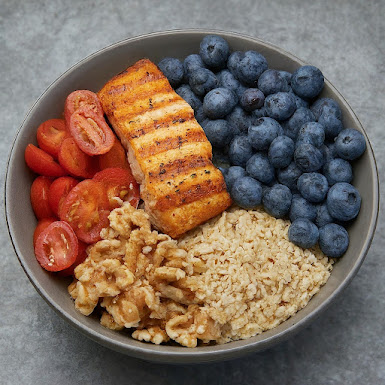
"Sizi zırh gibi koruyan" yaşlanma karşıtı 5 yiyecek

  "Sizi zırh gibi koruyan" yaşlanma karşıtı 5 yiyecek Pek çok insan mümkün olduğu kadar sağlıklı beslenmeye çabalıyor, besin değer...